
New U.S. Census estimates highlight DFW’s rising share of Texas’ population and its momentum toward becoming the third-largest metro in the U.S.

The latest U.S. Census population estimates for metro areas reinforce what many already see on the ground. The Dallas–Fort Worth region continues to be one of the most dynamic growth engines in the country.
As of 2025, Dallas–Fort Worth remains the fourth-largest metro area in the United States, with a population of 8,477,157. While still trailing Chicago at 9,434,123, the gap continues to narrow as North Texas posts some of the strongest growth rates among major metros. Since 2020, DFW has grown by approximately 11 percent, outpacing every other top five metro.
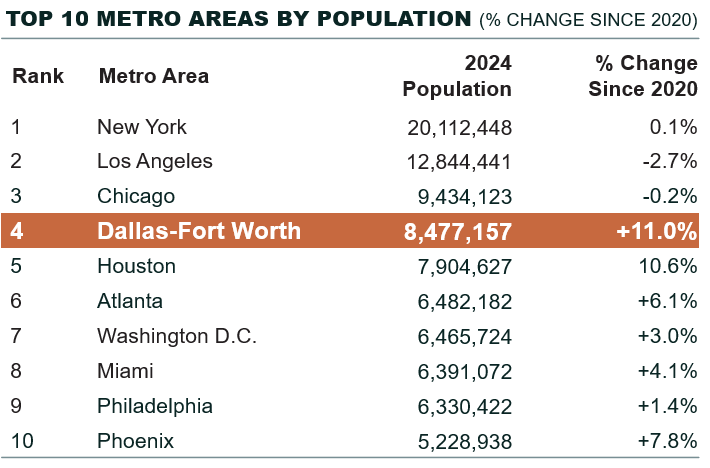
Over the past year alone, the Metroplex added 123,557 residents, or about 339 people per day. This growth is not driven by move-ins alone, but also by strong natural increase, reflecting both the region’s attractiveness to new residents and continued growth from within.
Texas is now home to an estimated 31,709,821 people, continuing its run as one of the fastest-growing states in the country. The Dallas–Fort Worth region makes up 26.7 percent of that total—meaning more than one in four Texans lives in DFW.
This growth is also reflected at the city level. Fort Worth officially crossed the one million population mark last year, becoming the fourth-largest city in Texas ahead of Austin and the 11th largest in the U.S. Updated Census estimates for cities, including Fort Worth, will be released this summer and will offer a clearer view of local growth trends.
Taken together, this growth across the state, region, and cities is more than just a statistic. It reflects the region’s expanding economic influence. Sustained job creation, corporate expansions and relocations, and a diverse industry base continue to attract talent from across the country and around the globe. At the same time, DFW’s central location, infrastructure connectivity, and pro-business environment are reinforcing its role as a national hub for growth.
Long-term trends underscore this trajectory. The region’s population has grown from 2.4 million in 1970 to more than 8.5 million today, with projections suggesting it could exceed 12 million by 2050. If current trends hold, DFW is on pace to potentially surpass Chicago later this decade.
Simply put, the data confirms it. Dallas–Fort Worth is not just growing. It is shaping the future of Texas and the U.S. economy.
—
The Fort Worth EDP works directly with companies, site selection consultants, and corporate real estate professionals who are interested in moving or expanding to Fort Worth, Tarrant County, and the surrounding areas. If you’d like to learn more about Fort Worth, please schedule a meeting with us or check out our Why Fort Worth page.