
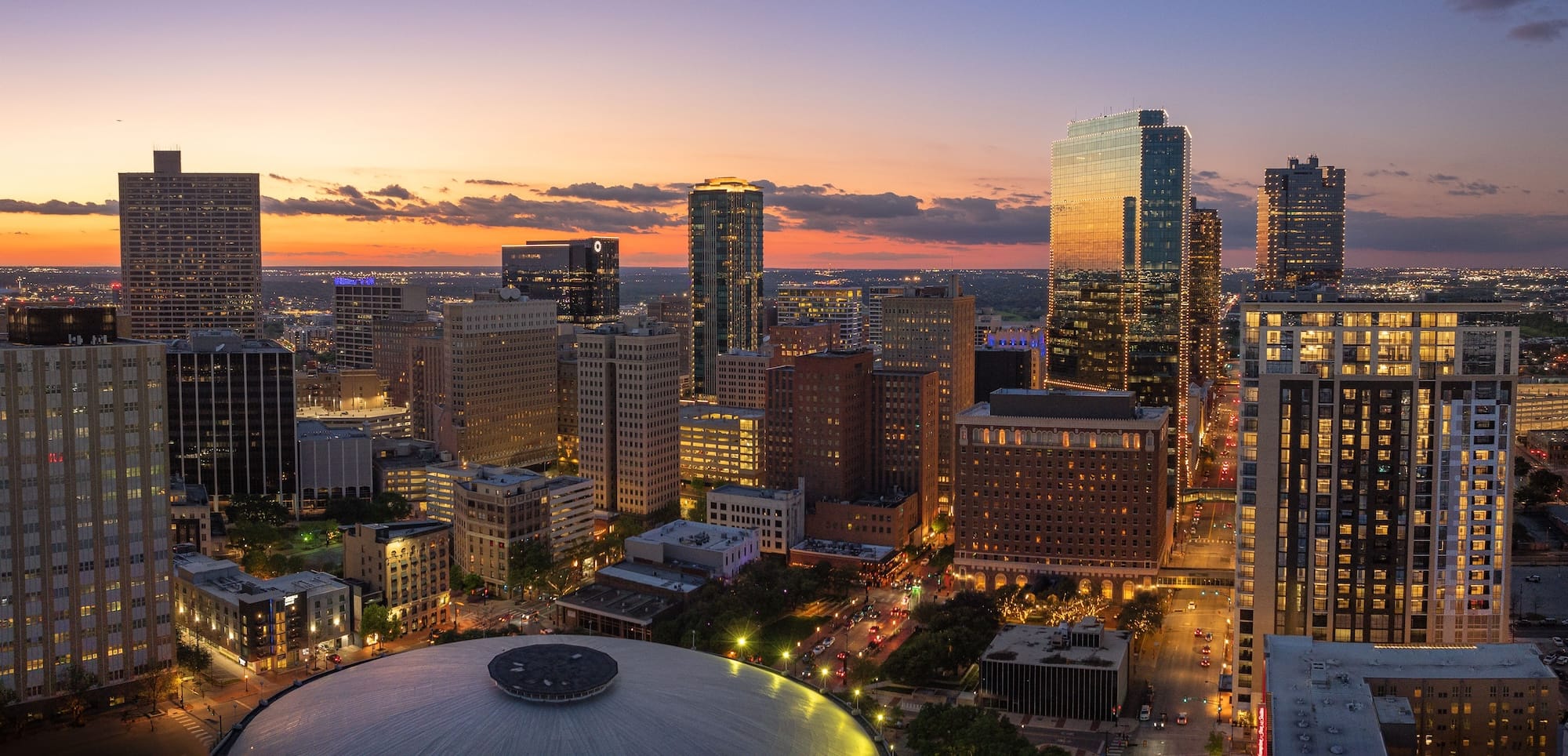
Fort Worth is a city where public and private sectors function as a single coordinated ecosystem — where the answer to “Can this get done?” has consistently been “yes,” and where the distance between a signed letter of intent and an operational facility is shorter than nearly anywhere else in the country. Since 2023, that model has produced more than 11,000 new jobs, more than $9.7 billion in capital investment (Site Selection Magazine, 2026; FWEDP, 2025). That pace of business relocations and expansions has quietly made Fort Worth one of the most active economic development markets in the U.S.
Fort Worth is the 10th-largest city in the nation (U.S. Census Bureau, 2025). It sits at the center of the fourth-largest metro in America, home to more than 8.5 million people across the Dallas–Fort Worth region (U.S. Census Bureau, 2025). But scale alone doesn’t explain what’s happening here. What sets Fort Worth apart is a culture that moves at the speed of decision-making, not red tape — a culture that gets it done.
Key Takeaways
- Coordinated Execution: Fort Worth’s public-private partnership model closes the gap between site selection and groundbreaking faster than peer markets, reducing risk and accelerating timelines.
- Deep Talent Pipeline: Access to nearly 4 million regional workers, 60,000+ annual university graduates, and 70%+ local retention—supported by major investments from TCU, UTA, Texas A&M Fort Worth, the Switchyard Innovation District, and more.
- Quality of Life That Retains Talent: World-class cultural institutions, a nationally recognized food scene, 13,000 acres of parks, and a cost of living 4% below the national average make Fort Worth a city people choose — and stay in.
- Built for Long-Term Growth: Operating costs 5% below the national average, no state income tax, and one of the largest inventories of developable land among major U.S. metros.
- Proven Track Record: 70+ business relocations and expansions since 2023, $9.7B in capital investment, and a roster of Fortune 500 companies that chose Fort Worth after exhaustive due diligence.
From Decision to Delivery
Ask any company that’s evaluated multiple markets for a relocation or expansion, and the same frustration surfaces: the gap between interest and execution, permitting delays, disconnected agencies, city leaders who are difficult to reach and slow to respond. It’s the hidden cost of doing business in most major metros, one that doesn’t show up on a site selector’s spreadsheet but determines whether a project launches on time or stalls for months.
Fort Worth has built its economic development model around closing that gap.
The Fort Worth Economic Development Partnership operates as a strategic advisor, facilitator, and connector, aligning state and local resources at every stage. Public-private partners work in coordination, with economic development, infrastructure, and workforce aligned within a single, integrated ecosystem. The result is a city where companies have direct access to decision-makers, where the process from site selection to groundbreaking moves without the bureaucratic friction that defines peer markets.
This isn’t aspirational. It’s the city’s proven track record. In Fort Worth the real advantage isn’t just cost, it’s reducing risk. Alignment across partners, access to leadership, and a coordinated development process mean fewer surprises, fewer delays, and greater confidence that projects will move forward as planned.
Talent That Shows Up and Delivers

Speed means nothing without the people to staff what you’re building. This is where Fort Worth’s scale becomes a strategic asset. The region offers access to nearly 4 million workers, with 2.6 million living within a 45-minute commute of downtown Fort Worth (Lightcast, 2025). But it’s not just the size of the labor pool; it’s the pipeline feeding it. North Texas universities produce nearly 60,000 four-year and postgraduate degrees each year (Dallas-Fort Worth Regional Economic Development Guide, 2026). More than 73 percent of those graduates stay to work locally (Perryman Group Higher Education Study, 2024).
That pipeline is growing. Fort Worth is in the middle of a significant wave of higher education investment, with major expansions underway from Texas Christian University, University of Texas at Arlington, Texas A&M Fort Worth, and Tarrant County College. TCU’s Neeley School of Business — ranked among the top 30 MBA programs nationally — retains 82 percent of its MBA graduates in the city. UTA broke ground in 2025 on a new 51-acre west Fort Worth campus expected to serve more than 10,000 students.
The new Texas A&M Innovation District, known as the Switchyard Innovation District, is a $1 billion-plus investment in the heart of downtown and is designed to accelerate the connection between academic talent and industry opportunity. And Tarrant County College, with more than 45,000 students enrolled, continues to supply job-ready, credentialed talent across the trades and technical fields that advanced industries depend on.
Other key institutions are also driving Fort Worth’s higher education. Tarleton State University Fort Worth is expanding its campus and welcoming its first freshman class, while Texas Wesleyan University is upgrading facilities to strengthen science programs, student success, and athletics.
What this means in practice: companies relocating or expanding to Fort Worth aren’t starting from scratch on hiring. They’re stepping into an established talent ecosystem where early-career professionals find opportunity, mid-career talent can advance, and leadership can execute from day one. The workforce isn’t just available. It’s already here, and it’s committed.
A Place People Can Step Into
A relocation decision isn’t just about where the company lands. It’s about whether the people you’re asking to move will actually want to be there, and whether they’ll stay once they arrive.
The practical case is straightforward. DFW International Airport ranks among the world’s premier international airports by size and global reach, offering nonstop service to more than 260 destinations worldwide and sitting just 30 minutes from downtown Fort Worth (DFW Airport, 2026). For companies with professionals who travel frequently, manage distributed operations, or stay closely connected to global teams and clients, this isn’t a convenience. It’s a requirement. Fort Worth delivers it without the two-hour airport commute that defines markets like Los Angeles, Chicago, or New York. The cost of living in the Fort Worth metro runs 4 percent below the national average, with housing costs more than 12 percent lower (C2ER, 2025). For a company asking employees to uproot their families, those numbers change the conversation, turning a relocation from a sacrifice into an upgrade.
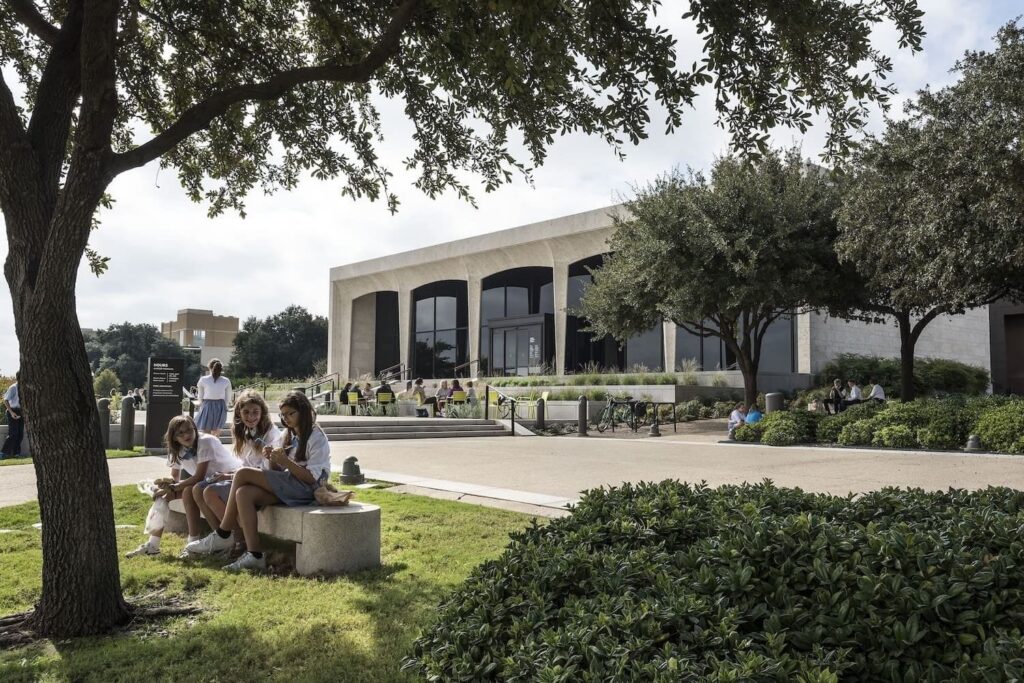
But what keeps people here goes beyond the math. Fort Worth has a character that’s genuinely hard to manufacture: a city that feels approachable without feeling small, that takes culture seriously without taking itself too seriously. The Fort Worth Cultural District is home to five internationally recognized museums, including the Kimbell Art Museum, widely regarded as one of the finest in the world. The food scene draws national attention, with two James Beard semifinalists and a dining culture that ranges from celebrated Texas barbecue to acclaimed fine dining. The Stockyards, Bass Performance Hall, 13,000 acres of parks and trails, and the nationally recognized Fort Worth Zoo, round out a quality of life that employees can feel on a Tuesday, not just a weekend.
Fort Worth’s 23,000 new residents in the past year tell the story as plainly as any statistic: people are choosing to move here. Companies that relocate to Fort Worth aren’t asking their people to make a compromise. They’re offering them a city that delivers on both counts, professionally and personally.
Room to Grow Without Disruption
The question every board asks about a new market isn’t whether it works today. It’s whether that market still works in five years. Fort Worth’s answer is structural. According to Moody’s Analytics, the cost of doing business sits 5 percent below the national average (Moody’s Analytics, 2025). Texas has been ranked the number-one state for doing business by multiple independent surveys (Tax Foundation, 2025; CEO Magazine, 2025). It has no state income tax and labor and energy costs rank among the lowest in the nation. These aren’t promotional figures. They’re the long-term operating conditions that protect margins as a company scales. For finance teams building five- and ten-year projections, this is the kind of stability that changes the math on a relocation.
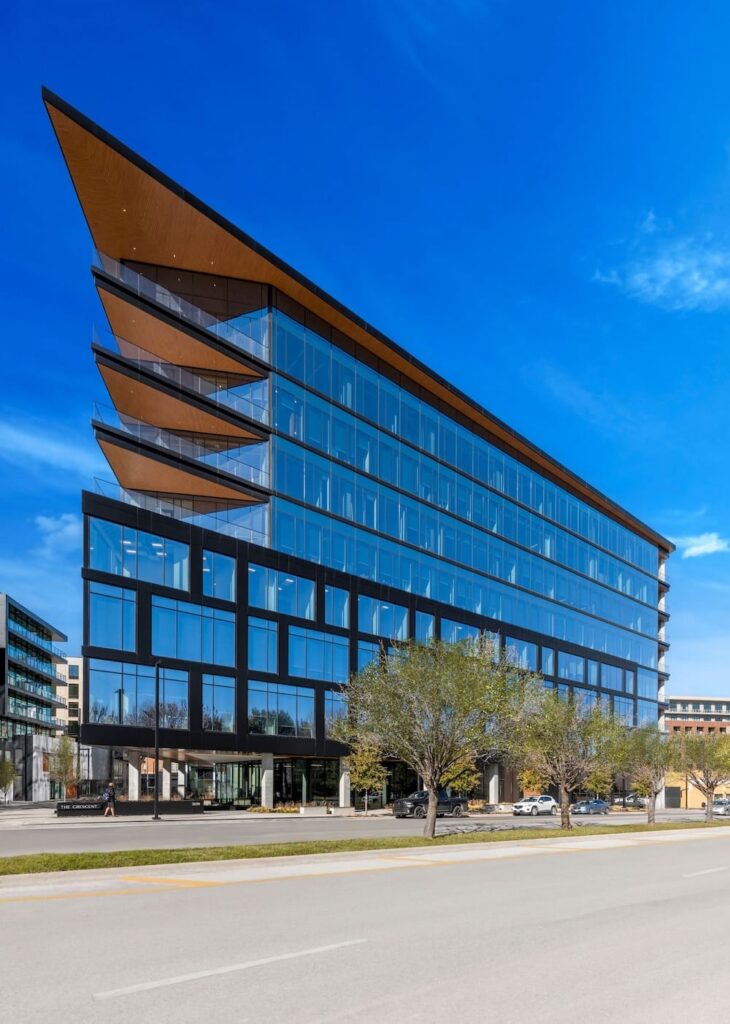
Fort Worth is built to support long-term growth that’s increasingly hard to find in major U.S. markets. With available land, ongoing new developments across office, industrial, and mixed-use projects, a deep and growing talent pool, and a business-friendly environment, companies can add facilities and headcount without the constraints that slow growth in more built-out metros. Fort Worth’s model doesn’t break under pressure. It was designed for it.
A Decision You Can Stand Behind
Fort Worth is home to industry-leading companies like American Airlines, BNSF, Bell, Alcon, GM Financial, Lockheed Martin, and more. In the last three years alone, the city has attracted more than 70 business relocations and expansions, including Ariat International’s new regional headquarters, Siemens new $190 million tech manufacturing facility, and Mercedes-Benz Financial Services USA headquarters (FWEDP, 2026). These aren’t companies that made speculative bets. They did the math, evaluated the risk, and chose Fort Worth because the fundamentals held up under scrutiny.
That list is still growing. Fort Worth has earned recognition from Forbes as a top-10 city for entrepreneurs (2025) and from WalletHub as one of the best large cities to start a business (2025). Its startup ecosystem, anchored by TechFW, is expanding across healthcare, energy, fintech, and mobility — a signal that Fort Worth’s growth story is forward-looking, not legacy-dependent.
Perhaps the most telling indicator is the simplest one: Fort Worth keeps winning the business of companies that have already done exhaustive due diligence. They arrive to find a city that operates with the sophistication, speed, and infrastructure of a primary metro at a fraction of the cost and with the capacity to support what comes next.
That’s what it means to have a culture that gets it done. Not empty promises. A proven track record.